Compression Index
with Sarah M. Rodriguez
Tara Downs, New York, NY
October 20 – December 8, 2023
This exhibition brings together two artists whose photography and sculpture are scientifically heterodox. Dionne Lee and Sarah Rodriguez build upon twentieth-century art historical currents that engage with the natural world, but they also grapple on a philosophical level with the nearly 300-year-old tradition of instrumentalist environmental thought and positivist biology. In their work they challenge us to explore an alternative intellectual history in which human technology alone is no longer the arbiter of landscape art and in which nameless organisms exist that are neither alive nor dead. Both Lee and Rodriguez are keenly interested in what it means to inhabit a place, to engage with the non-human world, and to wrestle with the moral and aesthetic stalemate of the American West. They are part of a generation thinkers who have digested the critiques of scientific dogmatism, American territorialism, and artistic imperialism and have moved beyond the simple rebuttal stage of critique. Instead, they have begun to find inspiration beyond the pale in the uncertain spaces of unfathomable timescales and not-yet-evolved hybrids.
Dionne Lee’s photographs resist easy interpretation. For Lee, the studio and darkroom are not only creative spaces, but also sites of research into both the geologic record and the technology of photography. Her purpose in sorting and rearranging is to nurture new ways of looking and less prescribed ways of knowing, but also to explore meaning in abstraction. She sees a kinship between the fossilized remnants of ancient plants and photographic processes. In this view, fossils are the first photographs, nature’s self-documentation thatpreceded any human apparatus and that are fixed in the original medium—rock. And like fossilization, photographs encode a kind of preservation that is contingent, chemical, a revelation.
Through a range of physical gestures that include scanning and photocopying geology textbooks and field guides, cutting directly from them, applying both soft and hard pressure to the back of the paper to create lines in relief on its surface, gluing, bending, drawing, and erasing, Lee makes images that should be understood as single landscape photographs. But instead of representing actual, cartographically authorized places, these landscapes are meditations on the fleeting meaning of the land itself. They reach toward the aesthetics of fossils but do not mimic them. They call to mind topographic unevenness and marks upon the ground but do not add up to a functioning map. They strictly eschew horizon lines, further destabilizing traditional landscape photographic convention as well as our sense of scale. They are at once about the deep past, the tools humans use to touch and penetrate and measure the earth, and a possible deep future in which our own bodies have mineralized and become fossils themselves. You cannot extract positive identifications of the excerpted found photographs in these collages, nor can you itemize a definitive iconography. The logic of Enlightenment science and its aspirations to certainty are withheld. Instead, these photographs invite the viewer to find their balance amid spatial and temporal disorientation.
– C. J. Alvarez
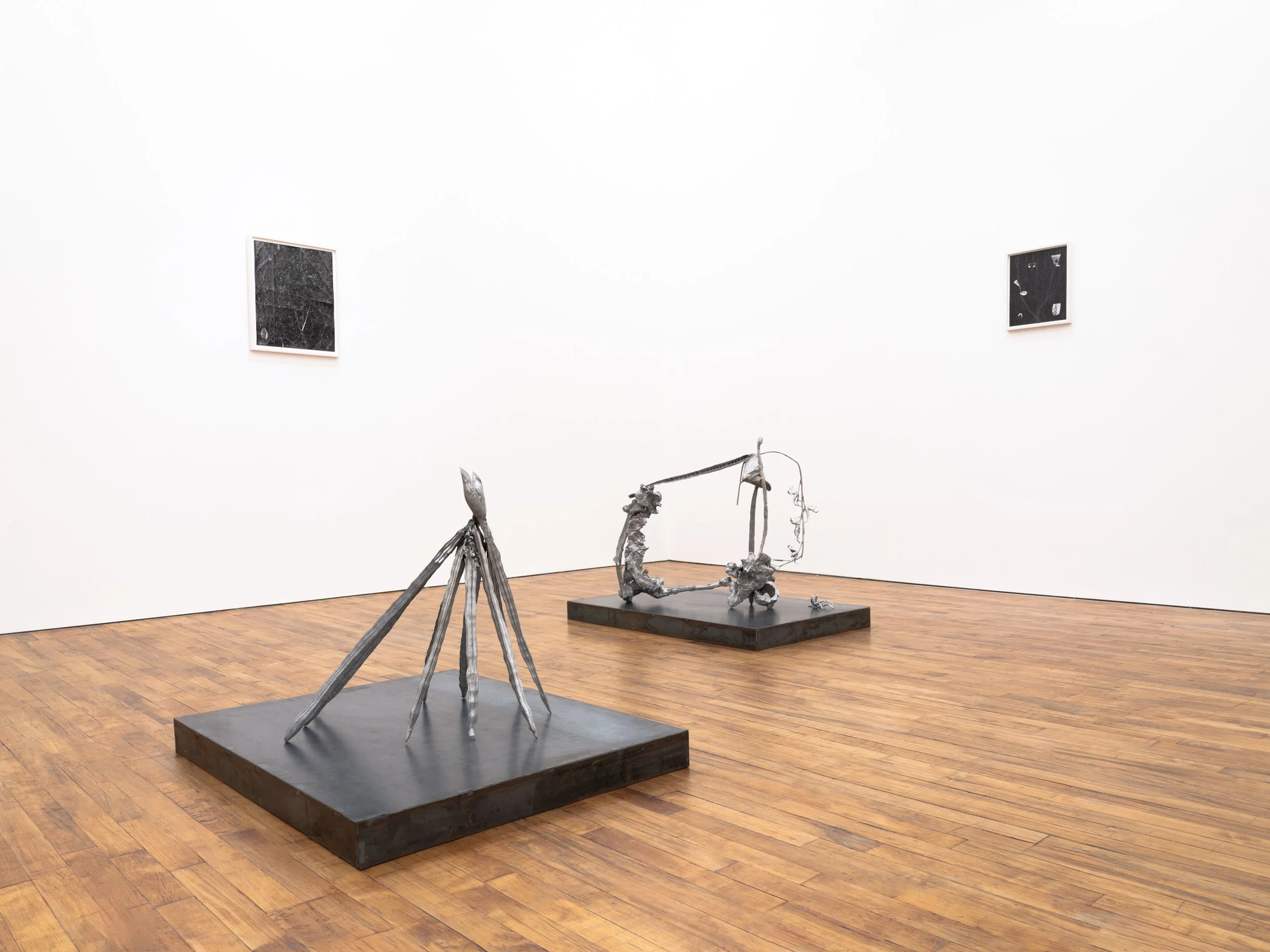
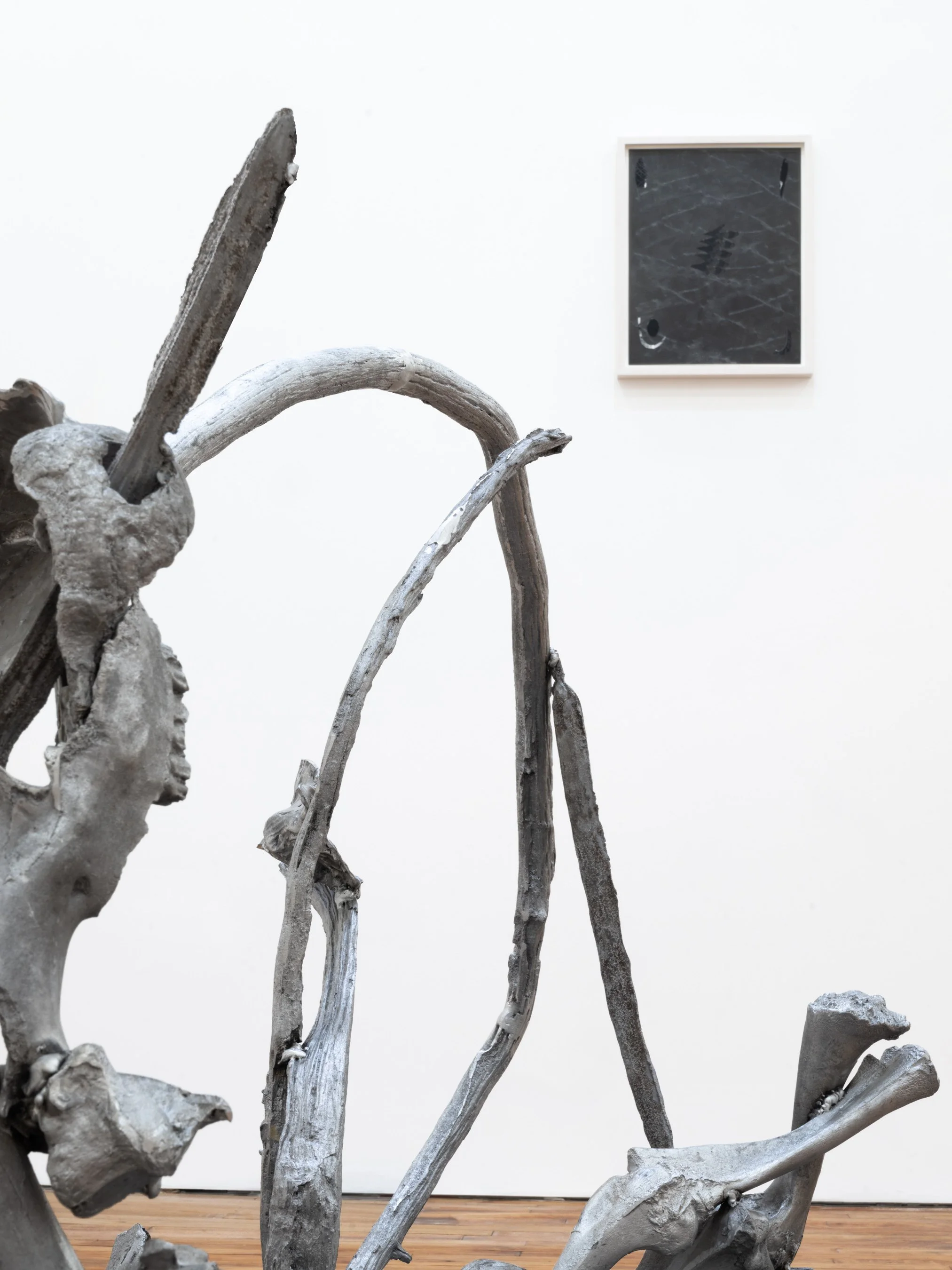
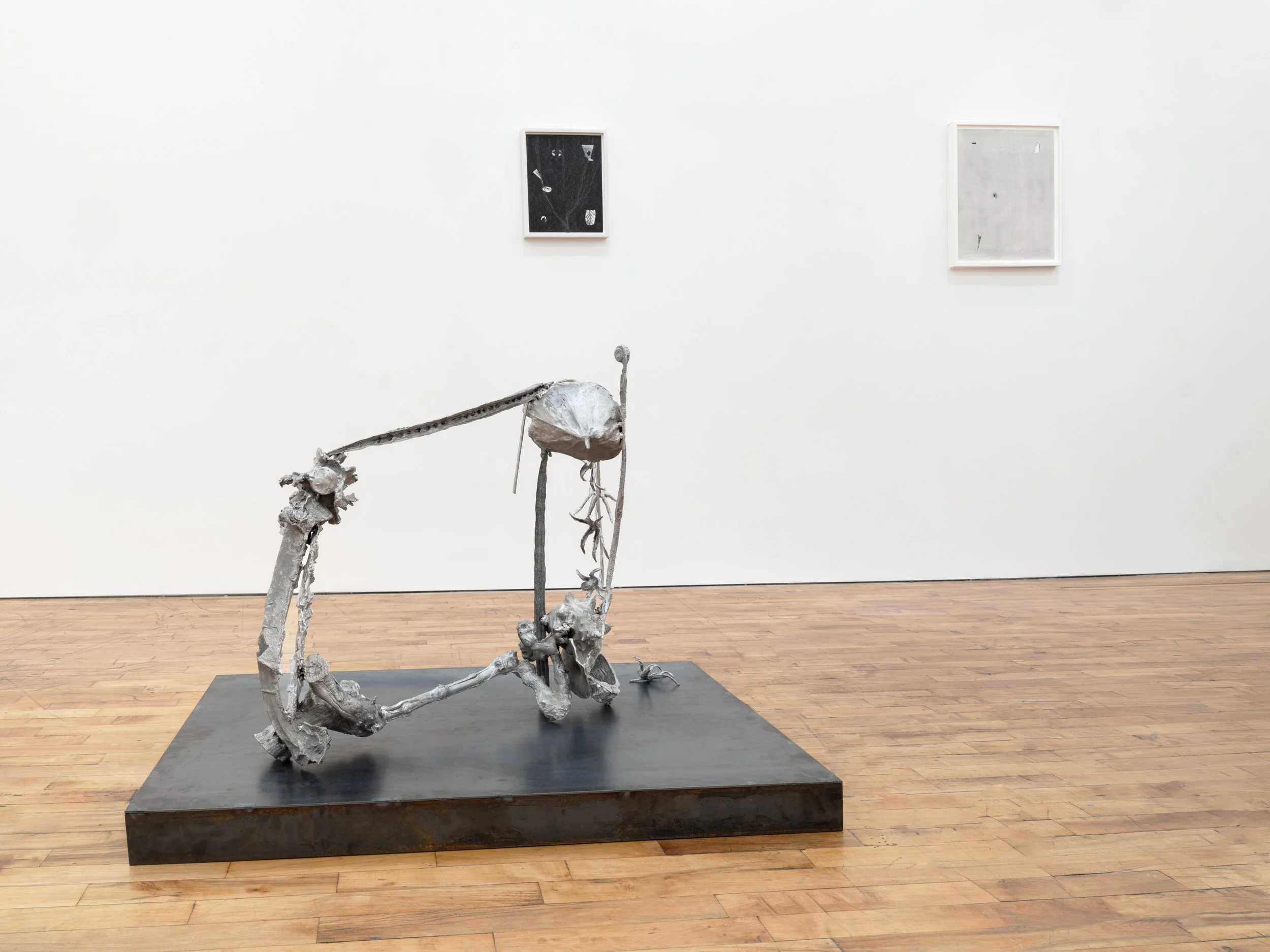
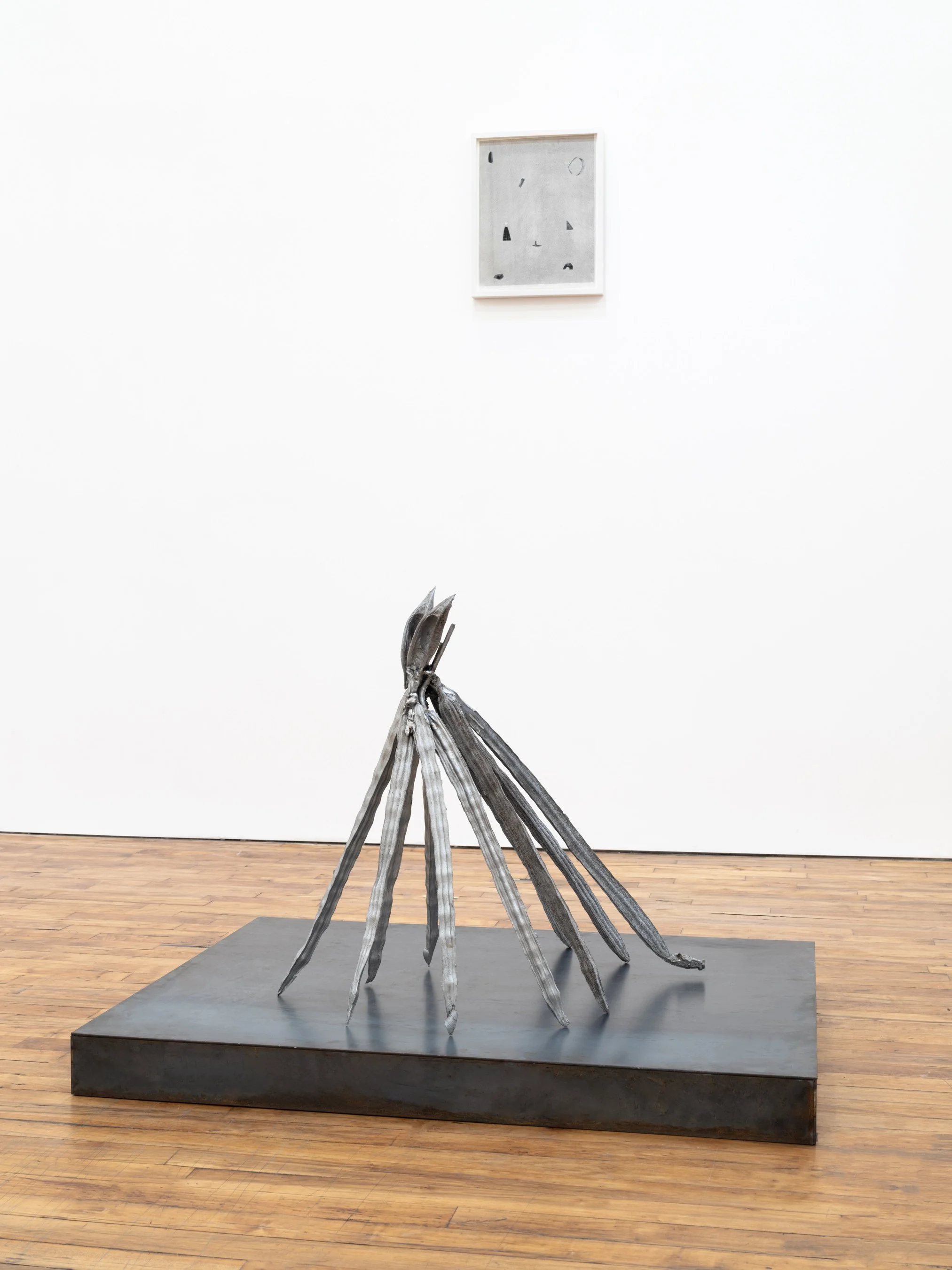
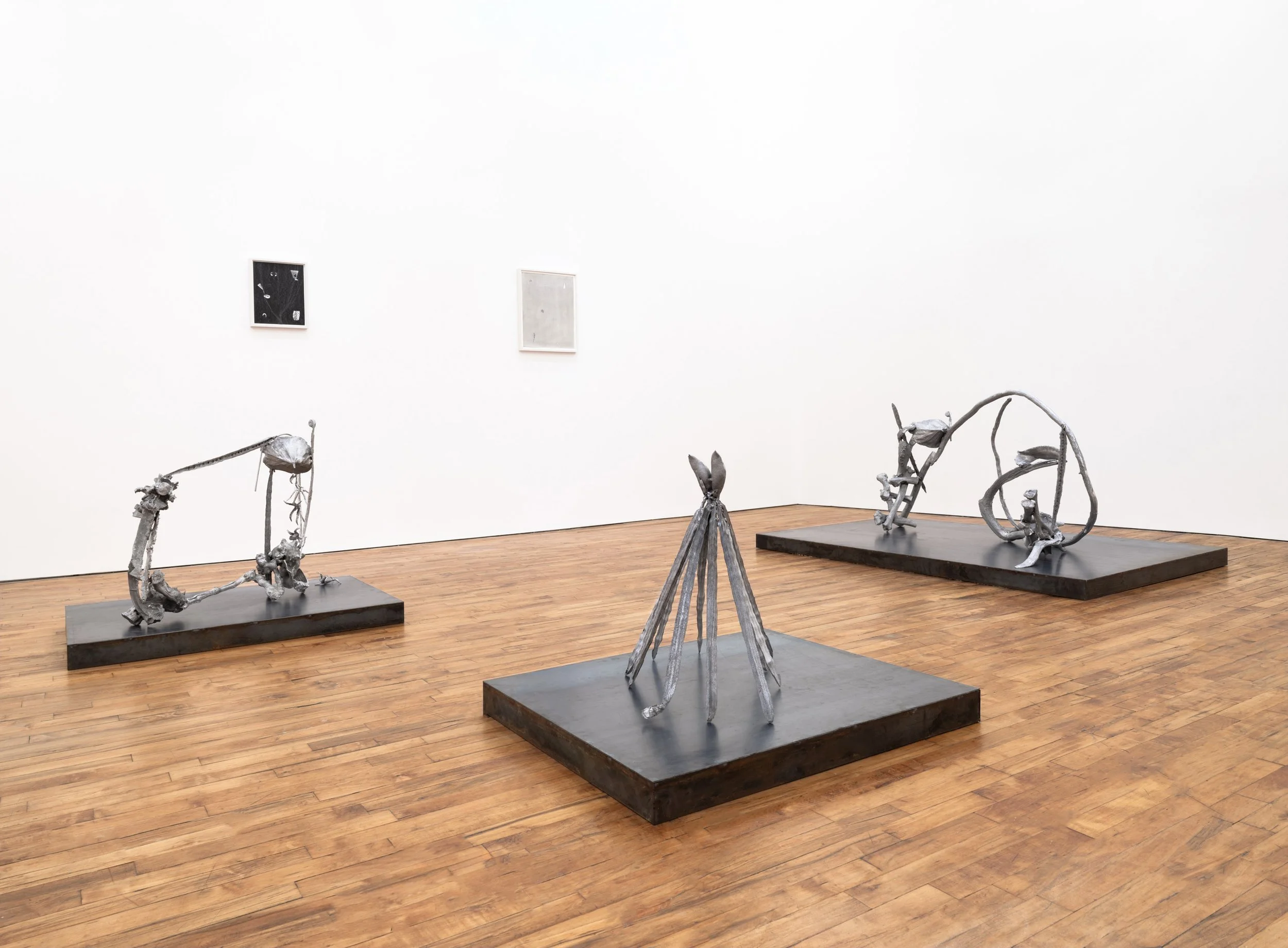
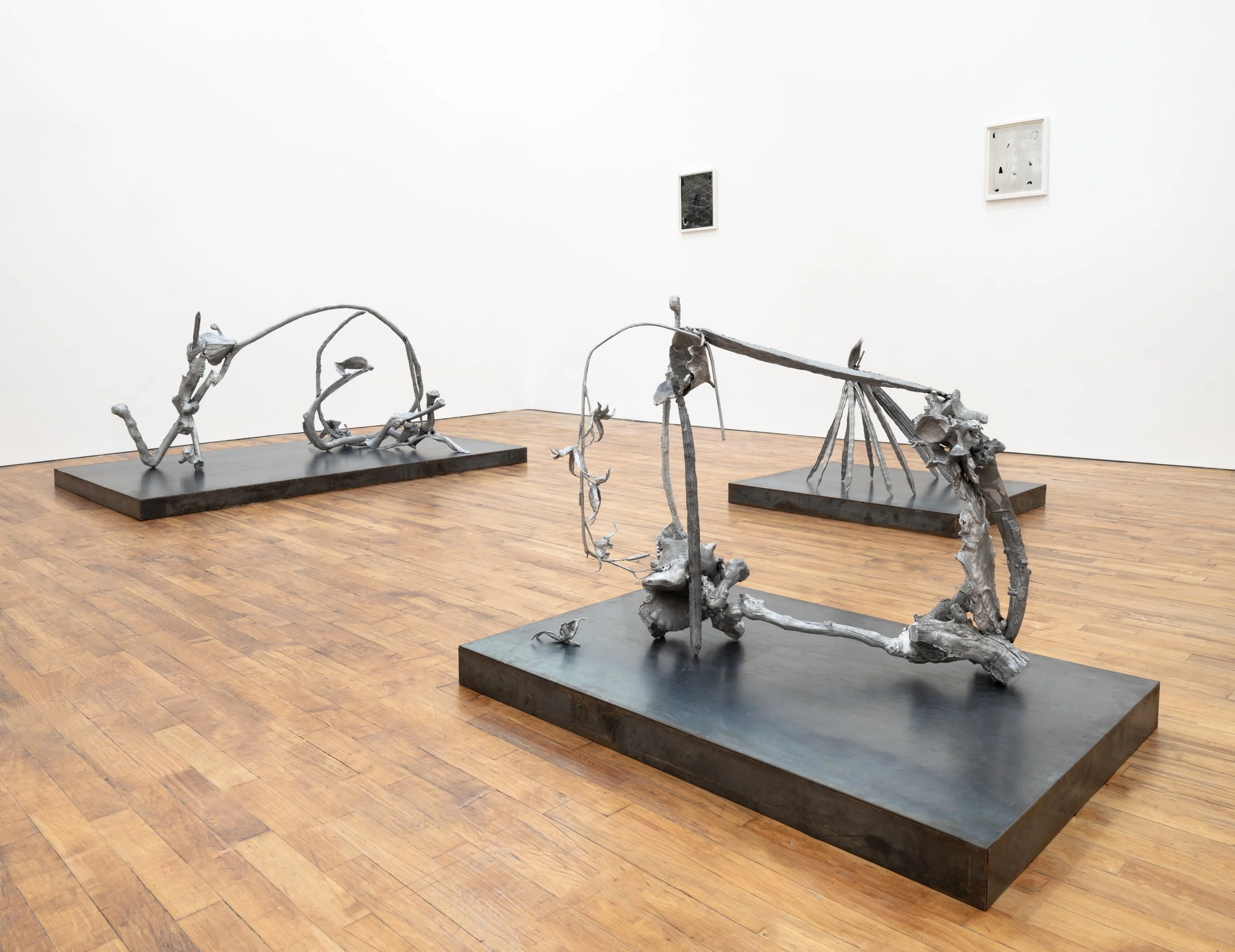
“Compression Index” at Tara Downs (New York, NY), October 20 - December 8, 2023. Installation images courtesy of Tara Downs.